
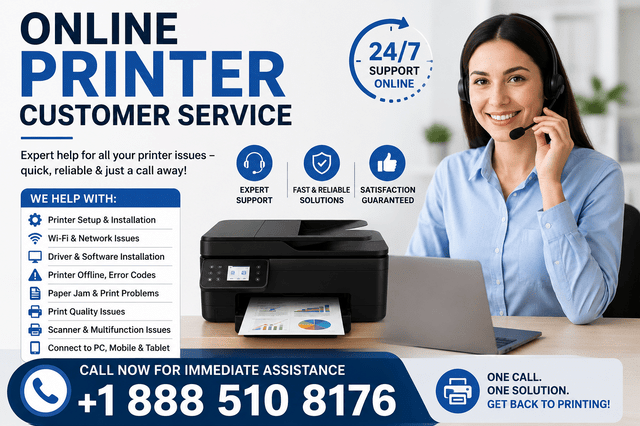
When a printer stops working, finding the right online printer customer service can help you identify the problem before spending time on unnecessary repairs. Whether the printer is offline, refusing to print, showing an error message, producing poor-quality pages, or having trouble connecting to Wi-Fi, online support can provide troubleshooting guidance based on the printer’s symptoms and model. The most useful approach is to collect basic printer information first and then work through simple checks before moving to more advanced solutions.
Quick Answer
Online printer customer service provides remote assistance for common printer problems such as connection failures, driver issues, paper jams, print-quality problems, installation difficulties, and printer errors. Start by identifying the printer brand and exact model, noting the displayed error message, and checking the connection between the printer and your computer or mobile device. Basic troubleshooting can often resolve simple issues, while persistent hardware problems may require hands-on service.
What Does This Mean?
Online printer customer service refers to getting printer-related help through digital channels rather than visiting a physical service location.
Depending on the provider and printer model, online assistance may include:
- Troubleshooting printer errors
- Printer setup guidance
- Driver and software assistance
- Wi-Fi and network troubleshooting
- Print-quality troubleshooting
- Scanner and copier troubleshooting
- Paper-jam guidance
- Printer status and offline troubleshooting
- Connection assistance for computers and mobile devices
- Guidance for replacing consumables
Remote support is particularly useful because many printer problems are caused by configuration rather than physical damage.
For example, a printer that appears offline may simply have lost its Wi-Fi connection. Similarly, a printer that refuses to print could have a stuck print queue, incorrect driver, wrong printer selected, or an empty cartridge.
However, instructions can vary significantly between brands and models. A procedure that works for one printer should not automatically be applied to another.
Common Causes
Before contacting online printer customer service, identify the symptoms as clearly as possible.
1. Printer Offline
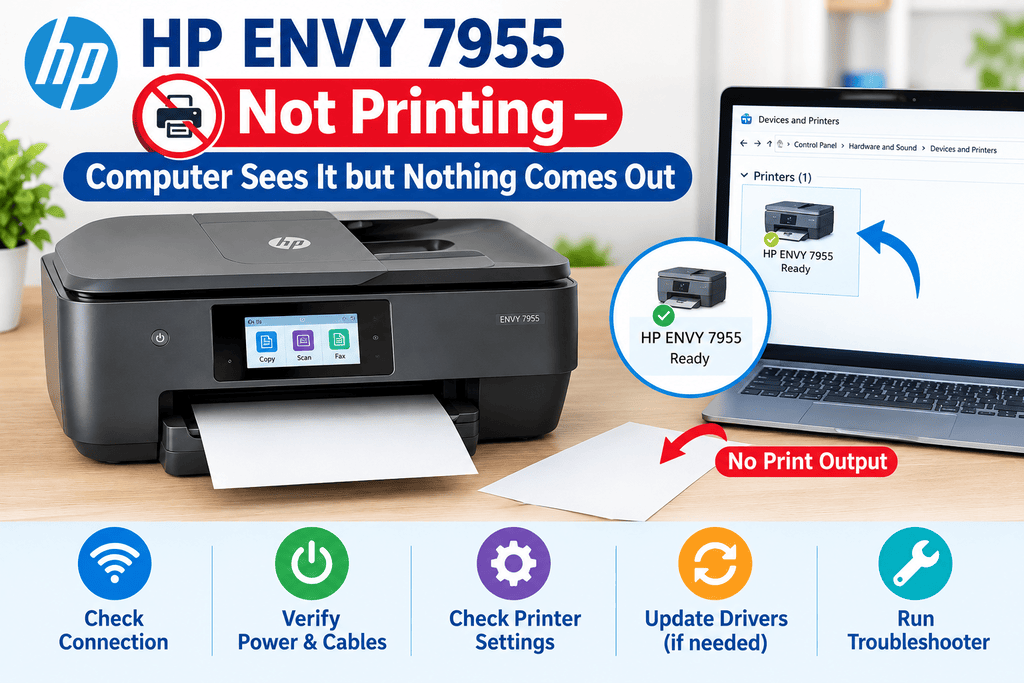
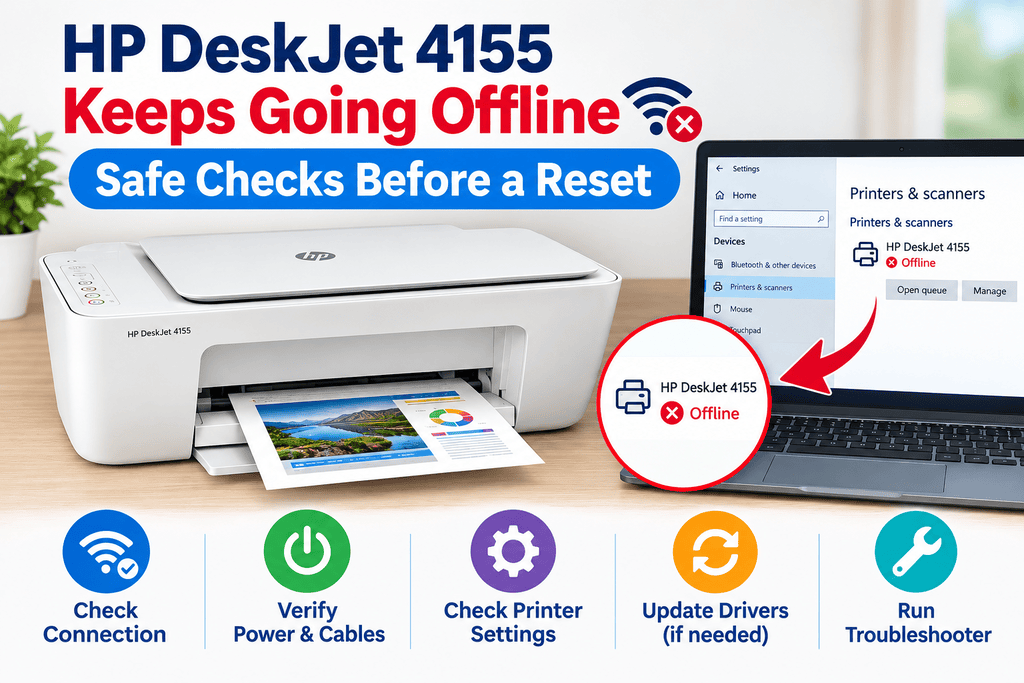
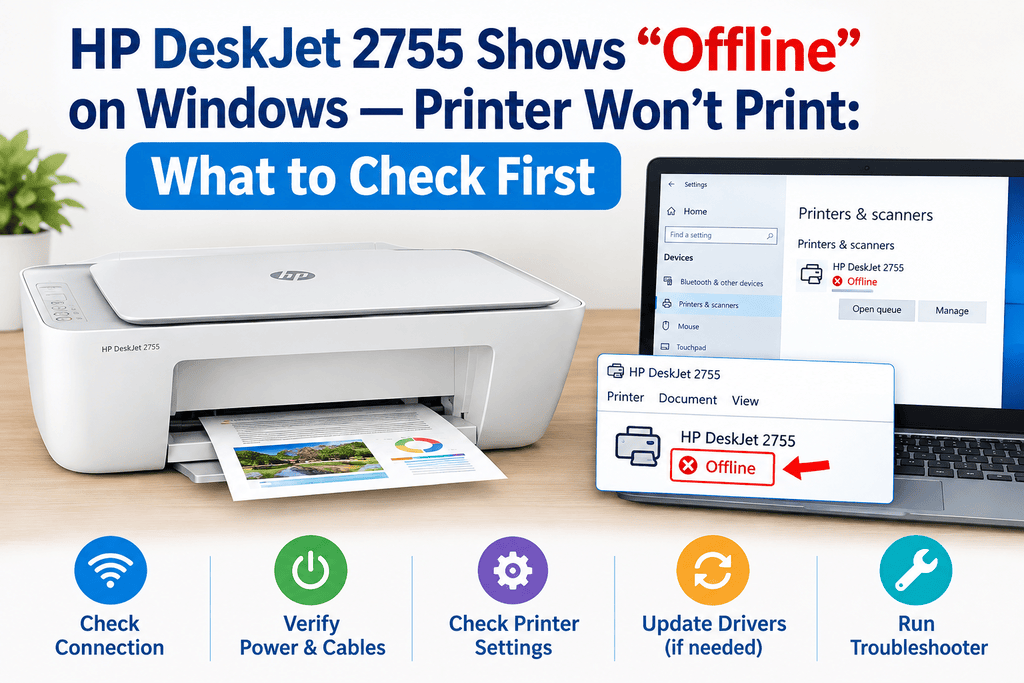
The computer may show the printer as offline even though the printer is powered on. This can happen after a network change, router restart, IP-address change, or communication problem.
2. Driver or Software Problems
An outdated, incompatible, or incorrectly installed printer driver can prevent the computer from communicating properly with the printer.
3. Wi-Fi Connection Problems
Wireless printers depend on a stable connection to the correct network. Changing the router, password, or wireless settings can interrupt communication.
4. Paper or Feed Problems
Paper jams, incorrectly loaded paper, or unsuitable paper can cause feeding problems and interrupted print jobs.
5. Print-Quality Issues
Faded text, streaks, missing colors, or blank areas may result from low or dried ink, toner problems, blocked printheads, incorrect settings, or other model-specific causes.
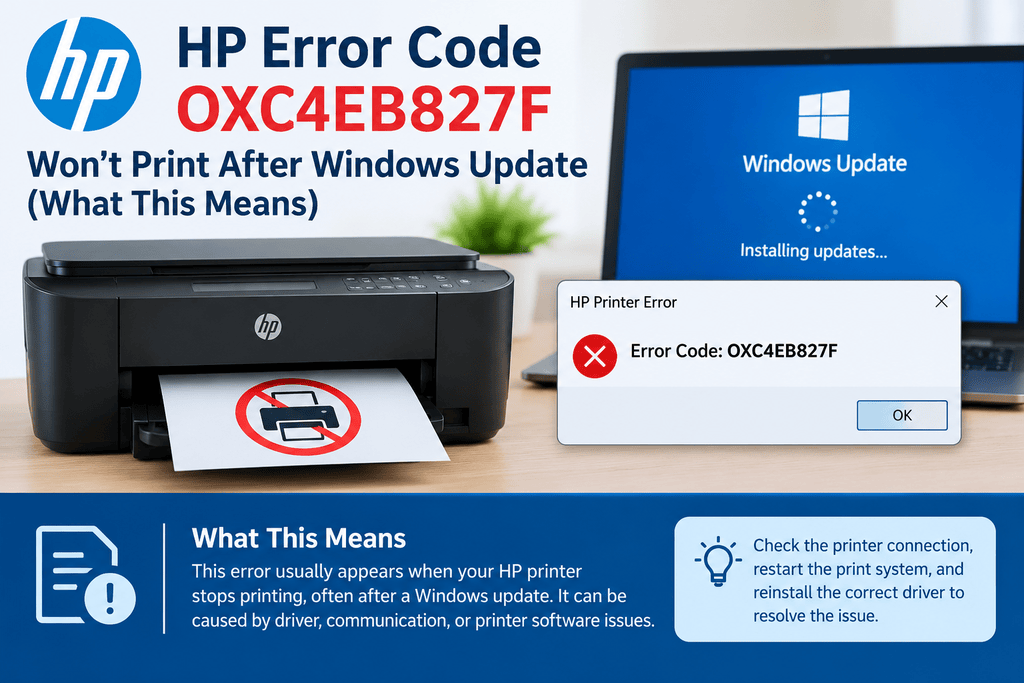
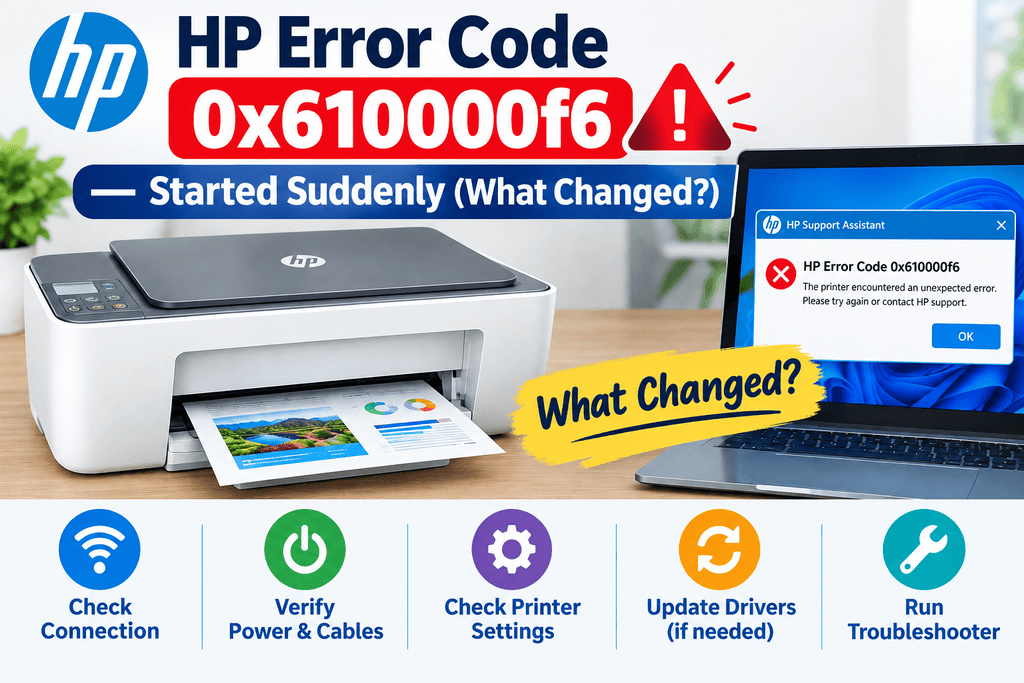
6. Printer Error Messages
A printer may display an error code when it detects a problem. The exact meaning depends on the manufacturer and model, so the complete error message is important.
Symptoms vs. Possible Causes
| Printer Symptom | Possible Cause |
|---|---|
| Printer shows offline | Network or communication problem |
| Print job stays in queue | Spooler, connection, or software issue |
| Printer will not connect to Wi-Fi | Wireless configuration or router issue |
| Pages are faded | Ink, toner, printhead, or settings issue |
| Paper will not feed | Paper loading or feed mechanism problem |
| Printer prints blank pages | Cartridge, printhead, driver, or settings issue |
| Scanner does not respond | Scanner software, connection, or hardware issue |
| Printer displays an error | Model-specific hardware or software condition |
Step-by-Step Solutions
1. Identify the exact printer model
Before changing settings, locate the printer’s complete model name or number.
This matters because menus, drivers, reset procedures, and error messages can differ between printer models.
Write down:
- Manufacturer
- Exact model
- Operating system
- Connection type
- Error message or code
This information makes remote troubleshooting much more accurate.
2. Check the printer’s basic status
Make sure the printer is:
- Turned on
- Connected to power
- Loaded with appropriate paper
- Free of obvious paper jams
- Showing no warning that requires attention
If the printer has an interactive display, read the complete message rather than relying only on an icon or warning light.
3. Check the connection
For a USB printer, make sure the cable is securely connected.
For a wireless printer, confirm that the printer and computer or mobile device are connected to the appropriate network.
If the printer recently worked but stopped after a router or password change, its wireless configuration may need to be updated.
4. Check the selected printer
Computers can have several printers installed. A print job may accidentally be sent to another device.
Open your operating system’s printer settings and confirm that the correct printer is selected.
If the printer is listed as offline, investigate its connection before repeatedly sending print jobs.
5. Clear a stuck print queue
A failed print job can remain in the queue and prevent later documents from printing.
Cancel unnecessary jobs and send a small test document.
If the queue repeatedly becomes stuck, the issue may involve the operating system’s printing service, driver, or communication with the printer.
6. Check the printer driver
If the printer is connected but the computer cannot communicate correctly, verify that the appropriate driver or manufacturer software is installed.
Use software intended for the exact printer model and operating system.
When this may not help: If the printer itself displays a hardware error, reinstalling a driver is unlikely to correct a physical fault.
7. Test from another application or device
Try printing a simple document from another application.
If possible, testing from another supported computer or mobile device can also help isolate the problem.
For example:
- If every device fails, investigate the printer or network.
- If only one computer fails, investigate that computer’s driver or settings.
- If printing works but scanning does not, focus on the scanner software or scanner hardware.
8. Restart the printer and network equipment
A restart can clear temporary communication problems.
Turn off the printer normally and restart the relevant computer or mobile device. For wireless problems, restarting the router may also help.
However, a restart will not repair damaged hardware or permanently incorrect configuration.
Solution vs. Difficulty vs. Estimated Time
| Solution | Difficulty | Estimated Time |
|---|---|---|
| Check power and printer status | Easy | 2–5 minutes |
| Check paper and visible jams | Easy | 2–5 minutes |
| Verify printer selection | Easy | 2–5 minutes |
| Check Wi-Fi or USB connection | Easy | 5–10 minutes |
| Clear print queue | Easy–Moderate | 5–10 minutes |
| Reinstall printer software | Moderate | 10–20 minutes |
| Troubleshoot network settings | Moderate | 15–30 minutes |
| Diagnose suspected hardware failure | Advanced | Varies |
Tips to Prevent the Problem
Good printer maintenance can prevent many common support issues.
- Keep the printer software and drivers appropriate for your model.
- Keep the printer’s firmware updated when the manufacturer recommends an update.
- Use suitable paper and store it in a dry location.
- Keep the printer clean and free from excessive dust.
- Avoid repeatedly switching the printer’s power off at the wall while it is operating.
- Keep wireless printer credentials available when changing routers or network settings.
- Remove completed documents from large print queues.
- Pay attention to warning messages before the printer develops a larger problem.
- Keep the exact model number available when requesting support.
For business or frequently used printers, keeping basic information such as the model, connection method, and common consumables can make troubleshooting faster.
Frequently Asked Questions
1. What is online printer customer service?
Online printer customer service is remote assistance provided through digital channels to help diagnose and troubleshoot printer setup, connectivity, printing, scanning, and software problems.
2. Can online support fix a printer remotely?
Some problems can be resolved remotely, particularly software, configuration, connection, and setup issues. Physical component failures may require hands-on inspection.
3. What information should I provide to customer service?
Provide the printer brand, exact model, operating system, connection type, symptoms, and any error message displayed by the printer.
4. Can online support help with a printer that is offline?
Yes. Troubleshooting can include checking Wi-Fi or USB connections, printer selection, network settings, and communication between the computer and printer.
5. Why does my printer work from one computer but not another?
The problem may be specific to the computer that cannot print. Its driver, printer configuration, print queue, or network settings may need to be checked.
6. Can customer service help with printer driver problems?
Yes. Driver installation and compatibility are common areas of printer troubleshooting. The correct software should be selected for the specific printer model and operating system.
7. Can online support diagnose a paper jam?
Support can provide instructions for safely checking and clearing accessible paper jams. If paper is trapped inside a difficult-to-access mechanism, professional service may be necessary.
8. Why is my printer printing blank pages?
Possible causes include cartridge or toner problems, clogged printheads, incorrect settings, driver issues, or a hardware problem. The correct diagnosis depends on the printer model.
9. Is an internet connection always required for printer support?
Online customer service requires internet access for communication with the support provider. However, some printer troubleshooting can be performed locally without an internet connection.
10. When should I seek physical printer service?
Consider hands-on service when the printer has repeated mechanical failures, physical damage, unusual internal noises, persistent hardware errors, or problems that remain after appropriate software and configuration checks.
Final Thoughts
Finding effective online printer customer service starts with clearly identifying the printer, connection type, symptoms, and displayed messages. Many common problems—such as an offline printer, stuck print queue, incorrect driver, or wireless connection failure—can be investigated remotely. Start with simple checks and use troubleshooting instructions designed for the exact printer model. If the problem points to damaged or failing hardware, remote guidance may not be enough and qualified hands-on service may be required.


Leave a Reply